Monday, July 13, 2009


With hopes of finding a pair of previously spotted Dickcissels at the county landfill, small group of us headed out for what we hoped would be a relatively easy re-location of the Dickcissels and then we could scout out the rest of the area for any uncommon birds might just drop by the ever popular landfill.
We got to the last known location the bird was spotted and the first thing we came across was this very proud Coopers Hawk with his breakfast. Several in the group half joked the it looked like the Cooper might have beat us to our quarry. Dead birds don't count. Maybe it was it still breathing? Anyway, nobody could ID breakfast and by this time Cooper had had enough of us staring at his breakfast. and decided to have his "to go."

We all spent some time combing the area for the now elusive Dickcissel. Success was finally ours when Jeff was able spot a pair in the high grasses not too far away from where the Cooper had been successfully hunting earlier.

And while it is leap to assume what breakfast was, it is interesting to note that the photo Jeff took shows that the Dickcissel is conspicuously missing his tail feathers. hmmmmmmm.


Sunday, July 12, 2009

Summertime


Bird Listing has slowed down dramatically since the end of May. After finishing up with 33 new birds for the year by May 31. June netted one new bird for the year, a Eastern Wood Pewee, can you guess what vocalization it makes? This brought my yearly total to 169. I had several misses, with birds that were spotted in the area but moved on before I had a chance. Black-billed Cuckoo, Yellow-billed Cuckoo, Summer Tanager (this would have been a nice one) plus several warblers.

In July so far I have only been able to add one bird but it was a great bird for me , a pair Dickcissels . A hard bird to find because they have the unusual habit (or actually no habit at all) of never returning to the same breeding area. While with many species you can almost set your watch to with their return or exit to an area. The Dickcissel, it was explained to me, never returned to the same place. While we have a pair in the county this year we may not see this bird again for several years. All in all #170 for the county - 2009. # 195 on the county life list and number 224 on the over all life list.

Ahh. God's plan worked out to the tiniest detail. He even kept the birder in mind when He designed migration. With little to chase I can focus on the garden, hanging with my peeps and enjoying other summertime pursuits.


Thursday, June 11, 2009

By May 31

With my total for the county at 163 by May 9th, I did not expect to have many more by month's end. I was how ever to add 5 to the total for 168 through May. The additions were
Willow flycatcher, Yellow-Crowned Night Heron, Blackpoll Warbler, Prothonotrary Warbler, and a Little Blue Heron.
Birds I tried for and missed were Yellow-Billed Cuckoo, Black-billed Cuckoo, Cerulean Warbler, Sora. The county list is around 216 species for the year. My total is approx 78% of the county total.

I am hopeful that during the fall migration I will be able to pick up these listed plus several others that I missed.

Friday, May 8, 2009

Updating, in case someone reads this blog.

A lot has been going on and I have seemingly been able to find something else to do rather then blog. Translation: I have been birding. More cold, rainy,windy days then I can count. But there is something stimulating about putting on layers of clothing, a wool hat, gloves and heading off to a woodlands area.
The woods appear to be asleep wrapped in winter's blanket of frost or snow. But it teems with activity. It amazes me that warm blooded creatures weighing no more the a couple of ounces, and often less, not only choose to stay for the winter but thrive.
I am speaking about our year round birds, Carolina Chickadees, Titmice, Northern Cardinals, White-breasted Nuthatches, Carolina Wrens the list is long.

I have set no particular goal for the year other then to participate in more of the county's birding trips, and visit areas in the county I haven't birded.

Here is how the year is progressing:
On January 1,The bird club when out on the first day of the year and we recorded 42 species. My total by January's end was 52 species. In February I added another 26 additional birds. By the end of March I had 12 more, bringing my yearly total to 90.

With April came the spring migration, and all kinds woodland birds including Warblers, lots of warblers. By April's end I was up to 135.

It is now May 9th and my count is at 163. Considering that I was pretty pleased after my first year of listing to come up with a county total of 144 for the year. I think I am doing pretty well. I can not believe how God has revealed His Creation to me in a way that I have never experienced.

The hi-lights have been many. To date I have recorded 39 new county birds in Howard County for 2009. While each and every one was a joy to discover, below are a few high lights

In no particular order:
White winged Cross Bills, my first Life bird of the year 3 county records.
Harris Sparrow, this bird has only been recorded in the county only a couple times - 4 county records.

Painted Bunting , same with this fellow. - 2nd county record
Golden Eagle, a flyover, when I happened to look up at the right time to see him ride the thermals

Rusty Black Birds, always a good find
Virginia Rail,

Sedge Wren, - 8 county records
Common Moorhen

Ta ta for now.

Thursday, February 12, 2009

Birding In January


I started this year off by getting up on January first at 7 am to restart my annual list. With a zeal that exceeds all types of weather and lack of sleep I met with the local birders that keep annual lists for county birds seen in a year,. Yes, there are several people that do this. Its a great past time and you can start afresh each year.


So January 1, 2009 at 8 am with the sky clear the temps in the teens, standing by a lake in the wind I started my new list. We visited several spots in the county and by 11 am we had counted 42 birds.
Not a bad start of the new year, considering I had a total of 37 birds middle of Feb last year. To date I am up to 63.
Some of the high lights have been life birds, Northern Pin-tail, Whitewing, Cross-bills, Tundra Swans, Gadwall, American Wigeon, and Green Winged Teal. All seen seen in the last two weeks.
I believe this has been the coldest January into February in several years and because of this all the lakes, ponds, and Reservoirs have been frozen over accept where the water fowl would keep it open for paddling around and diving for food. This has made for easy identification of birds I would probably have missed


Tuesday, December 30, 2008

Food fight at the back deck feeders

These guys had actually calmed down some. There were more mouths then perches and no one was willing to wait their turn.

Tuesday, December 23, 2008

Big Day Dec 23

Howard county is freezing. That is always promising news for birders. Today seems to be the day that a lot of rare visitors dropped from the sky. here is a partial list of Birds I saw. But by no means inclusive.
At Centennial Lake were the following: a Greater White Fronted Goose (1), Cackling Geese (3), Golden Eye (1), American Black Duck (1), Canvas backs (2) and a lot of other birds, Canadas - 1000+, Mallards, Ruddy Ducks, Hooded Mergansers, American Coots, Ring Necked Ducks, Ring Billed Gulls.

I also Visited Lake Elkhorn. and saw more of the same just a lot less.

The Greater White Fronted is quite rare for Howard County. The last being in 2000, or so I am told.

What is it?

What is this duck? Is this a Green Winged Teal or some knockoff brand of mallard? Black bill, pinkish legs fairly uniform brown throughout except the green wing bars. I found this bird in a mixed flock of Mallards and Mallard Hybrids.
Posted by Picasa

Wednesday, December 17, 2008

Dec 12 again

An added bonus was while I was returning to the hotel room I spotted 2 Purple Finches along the walkway coming back from the beach. I gather that this is a very seldom seen this far south. I am sure that this pair was blown south by the storm.
Before traveling to St. Augustine Florida I tried to contact the local bird club for directions to a nice birding spot but received not response. That, I guess is a good thing because I struck out on my own and I located this rarity. Bad for the St Johns Bird club because I have no one to contact to let them know they have Purple Finches in their county.

If by some miracle someone from St. Johns County reads this posting and is interested, I would be happy to tell them where I found a pair for PF's.


Also blown in by the storm were several beautiful star fish washed up on the shore.

Posted by Picasa

Tuesday, December 16, 2008

Dec 12, 2008. The Beach and the Willet


Posted by Picasa

Florida Shoreline

Dec 12, 2008
Friday morning in St. Augustine Florida was a cold windy post storm morning. A good time to visit the beach if you are looking for birds that were seeking shelter the night before.

There were Laughing Gulls, Herring Gulls, Ring Billed Gulls, Foster's Terns, Royal Terns, Brown Pelicans and White Pelicans, Sanderlings, Willets, and Ruddy Turnstones.


Posted by Picasa

Sunday, December 7, 2008

Community Watch program

Locals keep an eye on this trouble maker. 
Posted by Picasa

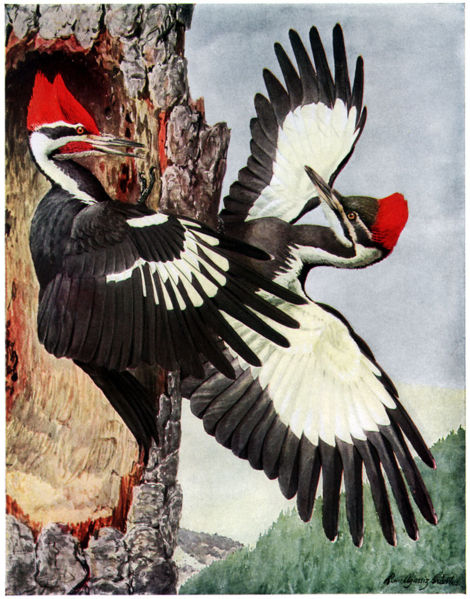
Pileated Woodpeckers


Saturday morning 17 degrees and clear. I decided to follow up on some postings of waterfowl located in the next county. Not having many migrents of late, Howard County has been very blah.


Piney Branch Park, located in Carroll County has a beautiful lake that abounds with waterfowl, Canadas, Ringnecked Ducks, Ringbilled Gulls, Buffleheads, Hooded Mergansers, Wigeons, Great Blue Herons, Mallards, Ruddy Ducks, Black Ducks, American Coots and several others that were too far away to view without a scope.


But my highlight for the morning were two Pileated Woodpecker working the trees for insectsPosted by Picasatotally unperturbed by my presences. I watched them for maybe five minutes before they flew off .

Saturday, November 15, 2008

Pine Siskins


Well, it is mid-November, and over a month since I last posted. This has been the doldrums. Between early migration starting in August with the Warblers, followed by Sparrows, and then the Accipiters and Buteos through October. Relatively little happens from the last of October and into early November. But, Mid November the Water fowl from the north start heading south for the winter months. i have seen alot of FOS (First of Season) birds but very few FOY (First of Year) birds. Without listing the few additions for the year, I will say that I am at number 148. I would like two more unique birds to reach my goal of 150 species in Howard County Maryland for the year.


Some highlights are a immature Snow Goose, six Cackling Geese mixed in with a large flock of Canadas.


Lastly, at our feeder this past weekend we have had several visits by Purple Finches and Pine Siskins. The Pine Siskins are pictured above along with one of our many regular backyard Goldfinches.


Monday, October 6, 2008

Garden Plots at Elkhorn Garden Plots


This is a great place to go Birding in the fall. Lots of migrants. The gardens provide lots of cover and a wide variety dining choices, seeds, insects, berries and old veggies left on the vines in many of the plots that have been left unattended in the fall. Additionally, very few gardeners are around to intimidate the little fellows. In fact the birders out number the gardeners this time of year

Nashville Warbler
Mourning Warbler
White Crowned Sparrow
Black-throated Blue Warbler
Palm Warbler (western subspecies)

Robins, Cardinals, B Jays, Carolina Wrens, House Wrens, House Sp. Mocking birds, Song Sp. , House Finches, Goldfinches. Common Yellow Throat.

I am looking for a Tennessee Warbler but I am afraid that I have missed it.

Photo Credit to Jeff Culler.He also help me identify the Palm Warbler (western) as I really had no idea what I was looking at.

Saturday, October 4, 2008

A Good day today


This morning I had a field trip with the local Bird Club. I always look forward to being with birders that have years in the field. You can not help but pick up tips on habitat & habits. Today was no exception. Many warblers have moved on but several are still present. One of those very experienced birder spotted one and then another Orange Crown Warbler (138 )the OCW stayed still long enough for everyone to get a good look. For many of us it was a life list bird. For almost all but the birders that have been at if for decades it was a county and state list bird.


Other first of the year birds were pair of Eastern Meadow Larks (139), a beautiful Indigo Bunting(140) and a Lincoln's Sparrow (141), this is also a lifer but fairly common for the experienced. Below is a complete list as compiled by our fearless leader. I did not see the entire list and sadly there are 2 sparrows in the list needed for the year.


Canada Goose:
Black Vulture: 2
Turkey Vulture: 1
Osprey: 1
Sharp-shinned Hawk: 3
Red-shouldered Hawk: 2
Red-tailed Hawk: 1
Mourning Dove: 1
Chimney Swift: 12
Red-bellied Woodpecker:
Yellow-bellied Sapsucker: 1
Northern Flicker:
Eastern Phoebe: 5
Blue Jay:
American Crow:
Carolina Chickadee:
Tufted Titmouse:
White-breasted Nuthatch:
Carolina Wren:
House Wren: 1
Ruby-crowned Kinglet: 4
Eastern Bluebird:
American Robin:
Gray Catbird:
Northern Mockingbird:
Cedar Waxwing:
Orange-crowned Warbler: 1-2. First winter bird, virtually devoid of field marks, grayish aspect, with broken eye ring, and pale yellow vent area.
Magnolia Warbler: 3
Yellow-rumped Warbler: 2
Black-throated Green Warbler: 6
Palm Warbler: 9-12
Black-and-white Warbler: 2
American Redstart: 1
Common Yellowthroat: 12
Eastern Towhee: 3
Chipping Sparrow:
Field Sparrow: 1
Savannah Sparrow: 1
Lincoln's Sparrow:
Northern Cardinal:
Indigo Bunting:
Red-winged Blackbird:
Eastern Meadowlark: 2
House Finch:
American Goldfinch

Wednesday, September 24, 2008

Compilation of the last two weeks

I am listing only new birds for the year.
(128)Black Throated Green Warbler 09/20/08 am
(129)Winter Wren 09/20/08
(130)Eastern Wood Pewee 09/20/08
(131)Broad Winged Hawk 09/21/08
(132)Pileated Wood Pecker 09/21/08
(133)Canada Warbler 09/21/08
(134)Blue Winged Warbler 09/21/08
(135)Blackburnian Warbler 09/21/08
Common Yellow Throat 09/21/08
(136)Philadelphia Vireo 09/21/08 - this was quite a find. I didn't realize it but someone else saw it two days before in the same area.
(137)Yellow Bellied Sap Sucker 09/24/08


Monday, September 15, 2008

Sunday Morning


Sunday, our local bird club had a field trip to Rockburn park. It was the first trip of the fall season and almost all the exceptional birders in the local club were there. As i result I learned more in a couple of hours at the park with these people then I ever could on my own. It is trips like these that really help expand my knowledge of how to locate and identify birds I would normally walk by and miss. We started about 8 am , I called it quits at 9:45 am.


Here is my list.
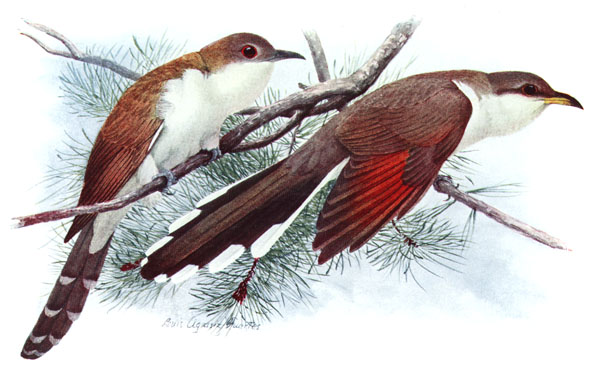
Number 126 - Yellow Billed Cockoo (2) Picture above
Number 127 - Bank Swallow - flyover

Saturday, September 13, 2008

Triadelphia Reservoir


Dana and I were up early today. She was meeting friends for breakfast, I had a men's study group at church. We decided it was a good day for a drive around Howard County's largest body of water, the Tridelphia Reservoir.

Today was more of a reconnoiter rather then an actual trip to bird, none the less I always end up making a list. Trip list is below.

Canada Goose - 36 (HOCO)
Double-crested Cormorant - 1 (MOCO)
Turkey Vulture - 1 (HOCO)
Bald Eagle - 1 (HOCO)
Least Sandpiper -8 (HOCO)
Caspian Tern - 1 (HOCO) (#125)
Belted Kingfisher - 2 (MOCO)
Red-bellied Woodpecker -heard (MOCO)
Northern Flicker - heard (Mont. Co)
Blue Jay heard (MOCO)
Vultures (sp)
Red-tailed hawk (HOCO)
Green Heron 2 (HOCO (MOCO)


Wednesday, September 10, 2008